Breaking the Transportation Trap Post-Incarceration
Reentry, Transportation, Faith-Based Support
When the Job Offer Isn’t the Finish Line: Breaking the Transportation Trap After Incarceration
Getting hired feels like the victory everyone has been praying for. But for many men and women coming home from prison, the real battle begins the first morning they try to get to work. At Genesis One Network, we see this every week across Oklahoma: a strong start quietly comes apart, not because of attitude or effort, but because of something as basic—and as complicated—as transportation.
The Closed Loop: Why Transportation After Incarceration Feels Like a No-Win Puzzle
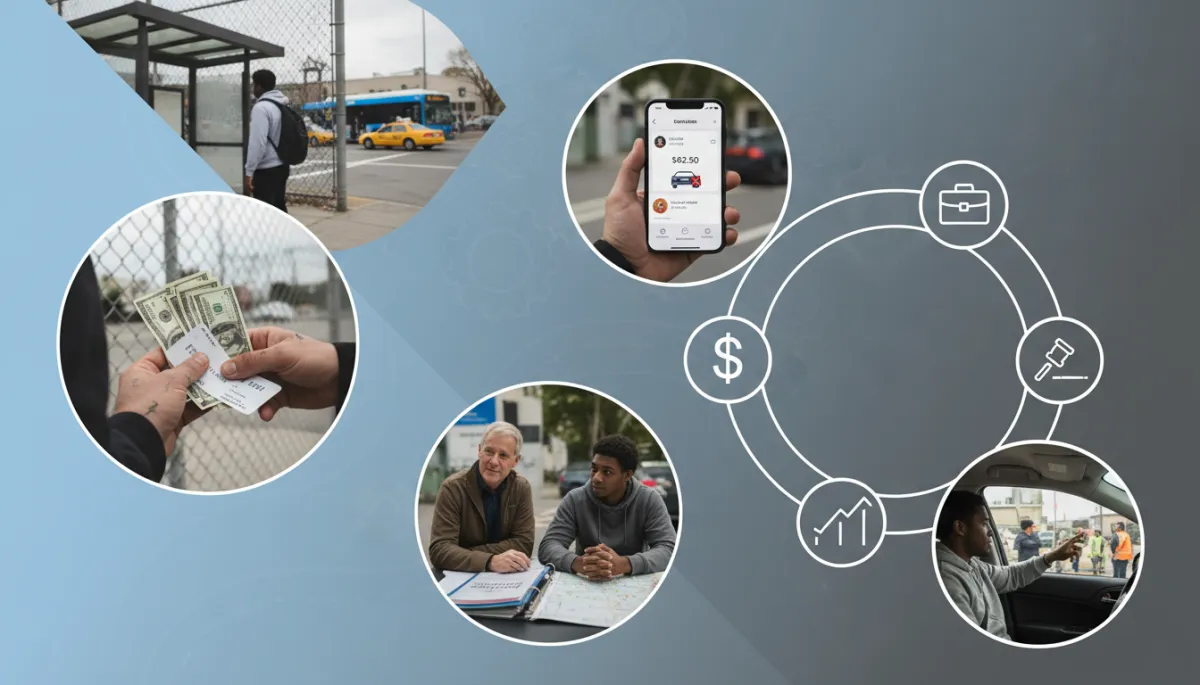
For many returning citizens, transportation is not just “hard”—it is a closed loop that seems impossible to escape. It often looks like this:
Your driver’s license is suspended because of old fines, fees, or unpaid tickets from before your sentence.
To get your license back, you have to pay those fines and sometimes complete classes or reinstatement steps.
To pay those fines, you need steady income from a job.
But to keep that job, you need reliable transportation—often a car you’re legally allowed to drive.
Public transportation in much of Oklahoma is limited or nonexistent, especially for early shifts, late nights, or warehouse and industrial jobs outside city centers. Research from organizations like the Urban Institute and Prison Policy Initiative has shown that lack of transportation is one of the most consistent barriers to employment for formerly incarcerated people—and a driver of recidivism when jobs fall through because someone simply cannot get there on time12.
This is the closed loop: no license without money, no money without work, no work without a way to get there. Unless someone steps in with a plan, a person who is trying to do everything right can feel trapped and defeated before the second paycheck ever hits their hands.

For many families, transportation costs compete directly with rent, food, and fines.
Why Rideshare Math Fails at $600 a Month
On paper, rideshare apps look like a modern solution. No car? No problem—just tap your phone. But when we walk through the numbers with our participants at Genesis One Network, the math quickly breaks down, especially on entry-level wages common for people with records.
Consider a conservative example in 2026 pricing:
A 10–12 mile commute in or around Oklahoma City might easily cost $8–$12 each way, depending on time of day, demand, and fees.
At $10 per ride, that’s $20 per day just to get to and from work.
Five days a week makes it $100 per week, or roughly $400–$600 per month once you add occasional surge pricing or extra trips for probation appointments, church, or child visitation.
Now compare that to a starting wage of $12–$15 an hour. After taxes, child support, supervision fees, and basic living expenses, $600 a month on rideshare is simply not sustainable. Reports on rideshare trends note that prices have been rising as companies adjust to fuel costs, driver pay, and regulation, not falling3. For someone just coming home, rideshare can be a helpful short-term bridge—but as a primary commute, it quietly eats the very paycheck that’s supposed to rebuild their life.
💡 Reality Check: When transportation takes one-quarter or more of a person’s income, it becomes a barrier, not a solution. A reentry plan that leans on rideshare without a clear exit strategy is setting someone up to fail.
The Hidden Fragility—and Dignity Cost—of Depending on Someone Else’s Car
When rideshare is too expensive, most people turn to the next option: somebody else’s car. That “somebody” might be a parent, a cousin, a girlfriend, a church member, or a friend from a recovery group. And while those rides are often offered with love, they come with a hidden fragility and a quiet cost to a person’s dignity.
One person’s crisis becomes your crisis. A sick child, a flat tire, a missed alarm, or a last-minute schedule change for your driver can mean you are suddenly late—or absent—for work, probation, or a court date.
Every ride feels like a favor. Even when people say, “I don’t mind,” many returning citizens describe the constant anxiety of asking: “Can you take me? Can you take me again tomorrow?” The emotional weight builds up.
It chips away at dignity. After incarceration, men and women are hungry to stand on their own two feet, to provide for their children, to show they are reliable. Having to beg for a ride can feel like being a child again—not the adult they are working so hard to become in Christ.
Scripture reminds us that, “Each one should carry their own load” (Galatians 6:5), even as we bear one another’s burdens. Healthy reentry support honors both truths. We gladly help with rides, but we also work toward a future where a person can say, with quiet confidence, “I’ve got this. I can get there on my own.”

Relying on others for every ride adds stress to relationships and to work.
Solving the Problem Before Release: Writing Transportation Into a Customized Life Plan
Because transportation is so foundational, it cannot be left to last-minute scrambling after someone walks out the gate. At Genesis One Network, we believe transportation must be addressed during pre-release planning and written directly into a person’s Customized Life Plan.
A strong transportation section of that plan doesn’t just say, “I’ll find a ride.” It asks concrete questions:
Where will you likely be working? What are the shift times? Is it on a bus route? How long is the commute?
What is the status of your driver’s license? What fees, classes, or documents are required to reinstate it? Can any steps begin before release?
What short-term solutions are realistic? Bus passes, church van schedules, carpool with a co-worker, or a limited rideshare budget for the first month only.
What is the long-term goal? A reinstated license, saving toward a used vehicle, or moving closer to work or transit.
When transportation is written into a Customized Life Plan, it becomes something we pray over, budget for, and track just like employment, sobriety, and spiritual growth. It moves from “maybe it will work out” to “here is the step-by-step path God is helping us walk.”

Thoughtful pre-release planning turns vague hopes into practical, trackable steps.
Beyond the Ride: What a Post-Release Mentor Really Does About Transportation
It might be tempting to think a mentor’s job is simply to “give rides.” Sometimes, yes, a Genesis One Network mentor will pick someone up for church, a job interview, or the first day of work. But the deeper ministry goes far beyond being a chauffeur. A faithful post-release mentor:
Helps map realistic options. Together they compare bus schedules, work hours, and housing locations. They look at what is truly possible, not just ideal, and adjust job choices if needed to match transportation reality.
Advocates with employers. A mentor can talk with supervisors about shift times, probation appointments, or ride challenges, building understanding instead of leaving the returning citizen to struggle in silence.
Works through license reinstatement. Filling out forms, making calls to the DMV, setting up payment plans for fines, and celebrating each step forward—these are practical acts of discipleship and encouragement.
Builds budgeting skills. A mentor helps decide how much of each paycheck can go toward transportation, savings for a vehicle, or insurance, without sacrificing food and rent.
Speaks life into moments of discouragement. When a ride falls through or a bus is missed and the job is at risk, a mentor is there to pray, to encourage, and to remind the returning citizen that one bad day does not erase God’s calling on their life.
In all of this, the mentor is modeling something powerful: shared problem-solving instead of silent shame. Transportation stops being a private struggle and becomes a challenge the Body of Christ faces together.

Reliable transportation becomes a symbol of dignity, stability, and answered prayer.
Partnering to Break the Transportation Barrier—and the Cycle of Recidivism
Getting hired is a milestone, but it is not the finish line. Without a way to get to work, that “win” can vanish in a matter of days. Transportation is not a side detail of reentry; it is one of its load-bearing walls. When that wall is weak, everything else shakes—employment, sobriety, family reunification, and spiritual growth.
Genesis One Network exists to walk with men and women before and after release, helping them build a Customized Life Plan that includes real answers to the transportation puzzle. Through mentoring, prayer, practical support, and community partnerships, we are working to ensure that the job offer is not the end of the story—but the beginning of a new, stable, God-honoring chapter.
📌 Key Takeaway: When churches, volunteers, and community partners step into the transportation gap—planning ahead, mentoring faithfully, and giving wisely—we don’t just provide rides. We protect jobs, preserve dignity, and help break the cycle of incarceration.
If you are an inmate preparing for release, know this: you are not alone. There are people ready to help you think through buses, carpools, licenses, and budgets—step by step. If you are a church leader, volunteer, or supporter in Oklahoma, we invite you to stand in this gap with us.
Partner with Genesis One Network to support offenders’ transformation and successful reentry into society. Together, by God’s grace, we can make sure that when someone gets the job, they can keep it—because the ride is no longer standing in the way of the life God is restoring.