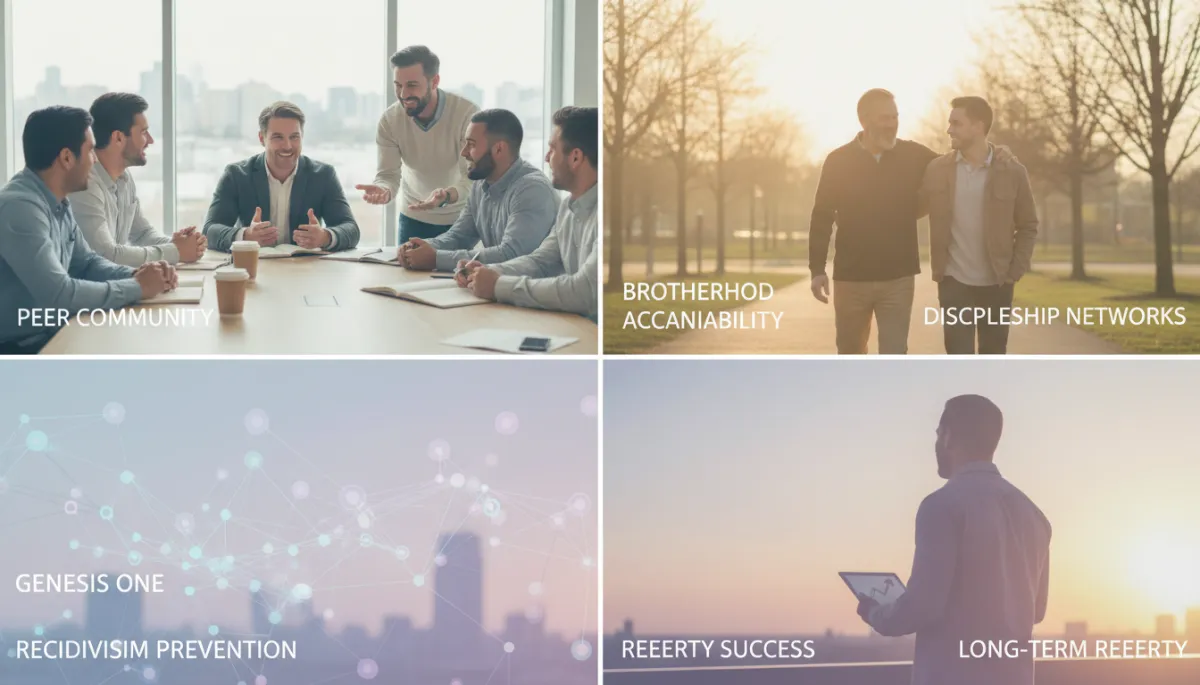
Building Peer Community for Reentry Success
Reentry Success, Peer Community, Recidivism Prevention
Building Peer Community for Long-Term Reentry Success
For men and women returning from incarceration, the difference between long-term Reentry Success and a return to prison is often found in one word: community. Genesis One Network, a faith-based reentry support organization in Oklahoma, has seen that programs alone are not enough. People need a Peer Community, rooted in faith and brotherhood, that walks with them before and after the gate. This article explores how cohort models, brotherhood accountability, and discipleship networks work together to prevent recidivism and create sustainable transformation.
Why Peer Community Matters for Reentry Success
Returning citizens often reenter neighborhoods marked by the same pressures, relationships, and temptations that contributed to their incarceration. Without intentional support, the path back to old patterns is tragically familiar. A structured Peer Community offers a different path. It provides safe relationships, practical guidance, and spiritual encouragement that reinforce healthy choices and new identities in Christ. In this context, Recidivism Prevention is not just about avoiding crime; it is about building a life anchored in purpose, accountability, and hope.
Genesis One Network designs its faith-driven Peer Community to surround participants with people who understand the unique challenges of reentry—housing, employment, family restoration, and spiritual growth. Peers who have walked the same road can speak with credibility and compassion, making it easier for participants to be honest about struggles and celebrate small victories. This relational foundation is essential for long-term Reentry Success.
Cohort Models: Walking the Journey Together
At the heart of Genesis One Network’s approach are structured Cohort Models. Rather than offering one-time classes or disconnected events, participants move through a shared journey in small groups that begin inside facilities and continue after release. Each cohort is guided through a clear pathway of faith formation, life skills, and practical planning for reentry, all within a consistent circle of peers and mentors.
Cohort Models create rhythm and predictability. Weekly gatherings, shared assignments, and ongoing check-ins help participants internalize what they are learning and immediately apply it to real-life decisions. Because the same group walks together over time, trust grows. Members learn one another’s stories, recognize patterns, and can speak truth in love when someone starts to drift. This continuity is a powerful driver of Recidivism Prevention, because individuals are no longer facing critical moments in isolation.

Consistent cohorts create trust, structure, and shared goals that support lasting change.
Brotherhood Accountability: From Isolation to Shared Responsibility
One of the most distinctive features of Genesis One Network’s Peer Community is its emphasis on Brotherhood Accountability. While accountability is often misunderstood as surveillance or punishment, Genesis One frames it as an expression of love and shared responsibility. Men in the program commit to stand with one another, speak honestly, and call each other back to the values of faith, integrity, and responsibility when they are tested.
Brotherhood Accountability is practiced through regular check-ins, peer-led prayer, and transparent conversations about work, relationships, and temptations. Participants are encouraged to set clear goals—for sobriety, employment, church involvement, and family restoration—and then invite their brothers to ask hard questions about progress. This culture replaces the secrecy and isolation that often fuel relapse with openness and mutual support, reinforcing Recidivism Prevention at a very practical level.

Brotherhood accountability turns difficult moments into opportunities for growth, not relapse.
Discipleship Networks That Prevent Recidivism
While cohorts and accountability circles are vital, Genesis One Network’s broader vision is to build interconnected Discipleship Networks that extend beyond any single program or location. These networks link current participants, alumni, mentors, churches, and community partners across Oklahoma into a web of ongoing support. The goal is simple but ambitious: to ensure no returning citizen has to navigate reentry alone.
In practice, Discipleship Networks look like mentors meeting weekly with participants, local churches welcoming returning citizens into small groups, and alumni serving as peer leaders for new cohorts. When someone moves, the network helps connect them to a new congregation or support group. When a participant faces a crisis—a job loss, a family conflict, a spiritual struggle—there is already a circle of people ready to respond. This continuity of care is a crucial factor in long-term Reentry Success and measurable Recidivism Prevention.
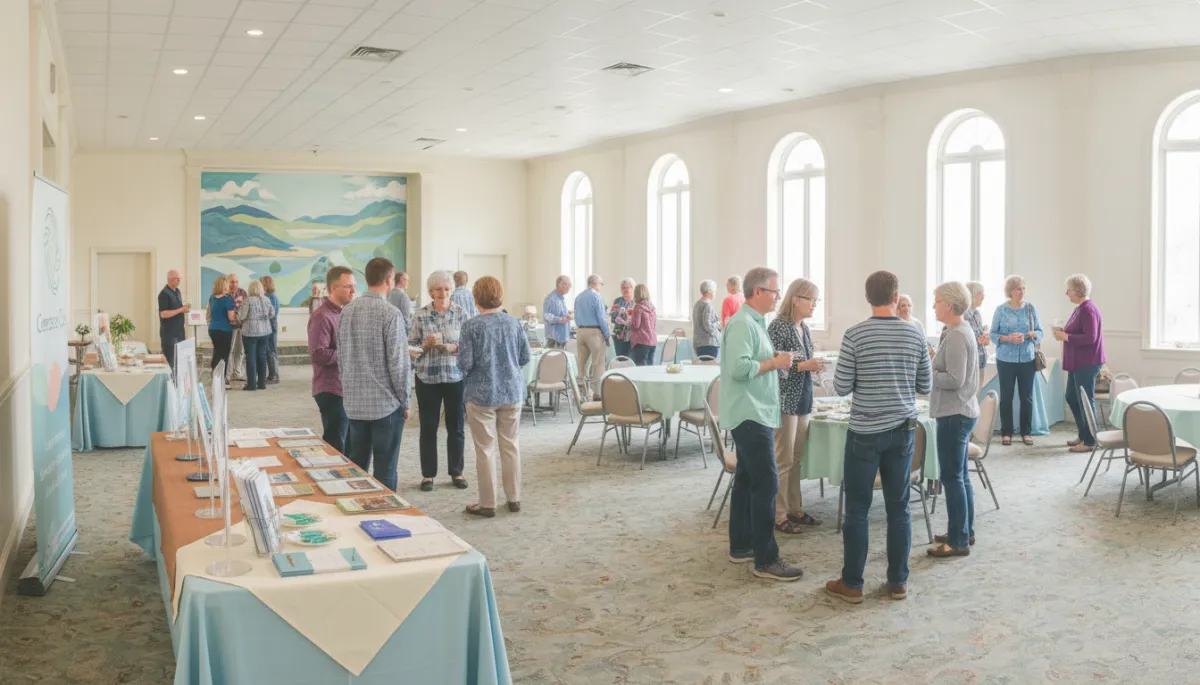
Discipleship networks connect participants, mentors, and churches into a sustaining support web.
Partnering for Faith-Driven Reentry Success
For professionals, churches, and community leaders, the implications are clear. Effective Recidivism Prevention is not achieved through isolated services, but through integrated Peer Community, robust Cohort Models, intentional Brotherhood Accountability, and resilient Discipleship Networks. Genesis One Network offers a faith-based framework that honors the dignity of each person, points them to Jesus Christ, and surrounds them with the relationships needed for lasting change.
As a nonprofit committed to second chances, strengthening individuals, and reuniting families, Genesis One Network invites partners across Oklahoma to join this work. By volunteering as mentors, opening church doors to returning citizens, funding cohort-based programming, or referring individuals to our services, you help build the Peer Community that makes long-term Reentry Success possible. Together, we can break the cycle of incarceration and demonstrate that, with faith, accountability, and community support, transformation is not only possible—it is sustainable.
Partner with us to support offenders’ transformation and successful reentry into society. When we invest in people through Christ-centered community, we do more than prevent recidivism—we help restore lives, families, and neighborhoods across Oklahoma for generations to come.