Incarceration Sentences More Than One Person
When a person is sentenced, the count in the courtroom is one. But the sentence is never served by one person alone. It's served by the child who now has an empty chair at dinner, the spouse carrying a household built for two, the mother who answers the phone for fifteen minutes and then listens to the line go dead. They committed no crime. They serve the time anyway.
This is the part of incarceration the system doesn't account for — and the part a ministry can't afford to ignore.
## The Silent Sentence
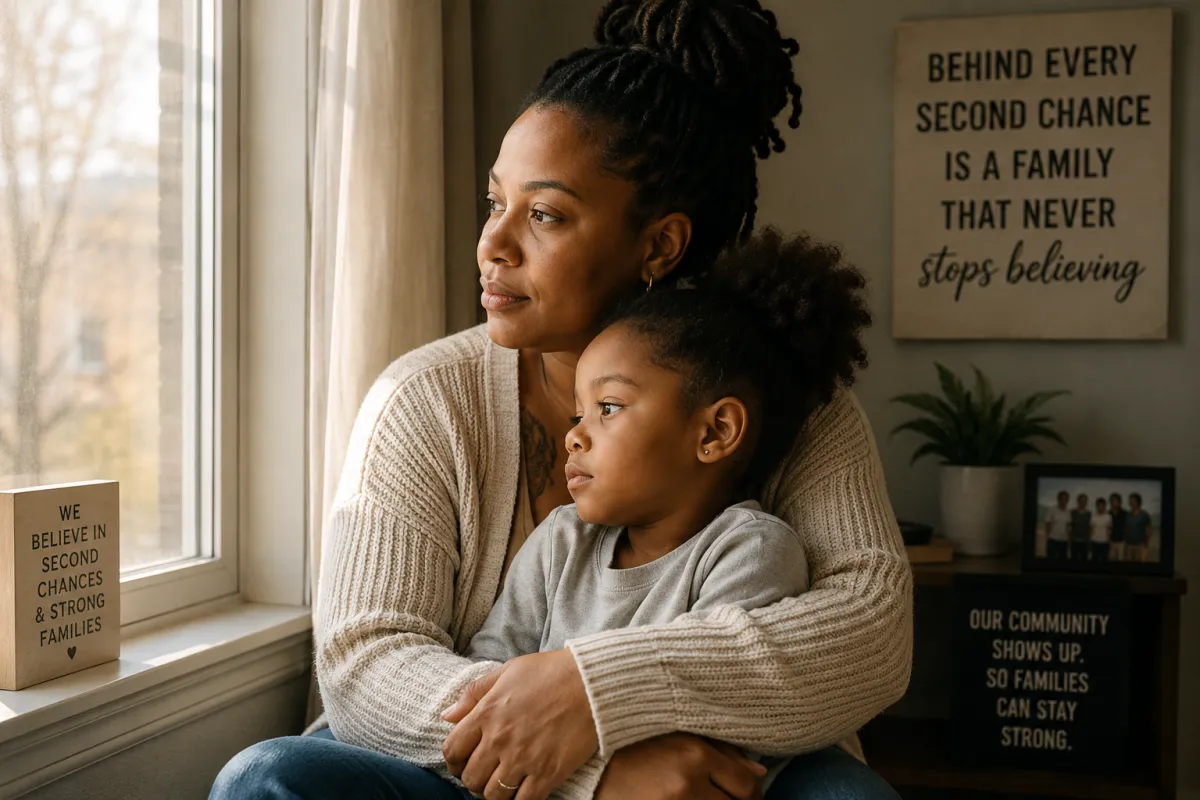
Families on the outside live a quiet version of the same punishment. There's the financial weight of losing an income and absorbing the cost of staying connected — the calls, the travel, the commissary. There's the social weight of a stigma the family did nothing to earn but carries anyway. And there's the emotional weight on children especially, who often don't have the words for what's happened and absorb it in ways that surface for years.
Left unsupported, that strain doesn't just hurt the family in the moment. It quietly shapes the outcome of the entire sentence.
## Why the Family Decides So Much of Reentry
Here's what years of reentry work make plain: the strength of the community a person returns to is one of the largest factors in whether they stay free. A person released to a stable, supported family has a foundation to rebuild on. A person released to a family that has been worn down to nothing over the years of absence is walking back into fragility — and fragility is where the cycle restarts.
So supporting the family is not a side ministry to the work of reentry. It is the work of reentry. You cannot fully serve the person inside while ignoring the people holding the door open on the outside.
"Carry each other's burdens, and in this way you will fulfill the law of Christ" (Galatians 6:2). Some of the heaviest burdens are carried in living rooms, not cells.
## How This Community Steps In
Genesis 1 Network's approach has always reached past the cell to the network a person returns to — the relationships and resources that make a released life sustainable. Its aftercare network connects returning members to the basics of rebuilding, and the monthly potluck community gives graduates a consistent place to belong instead of returning to isolation. The people who sustain that work — mentors, prayer partners, and community supporters — are often the same people positioned to come alongside a family that has been quietly carrying a sentence of its own.
This is also the place where people who feel they can't serve inside a facility find their role. Not everyone is called through the gate. But everyone can help strengthen the community a person comes home to — through presence, through prayer, through practical support.
## You Have a Place in This
Whether you can host, give, pray, or simply show up consistently for a family that's struggling, there is a role for you. The need is not abstract and it is not far away — it's in your own community, in homes that are quietly serving a sentence no one sees.
If your heart is moved by the families left behind, reach out. Visit ai-elite-solutions.com/contact and our team will help you find your place — whether that's as a prayer partner, a community supporter, or a steady presence for a family that needs one.