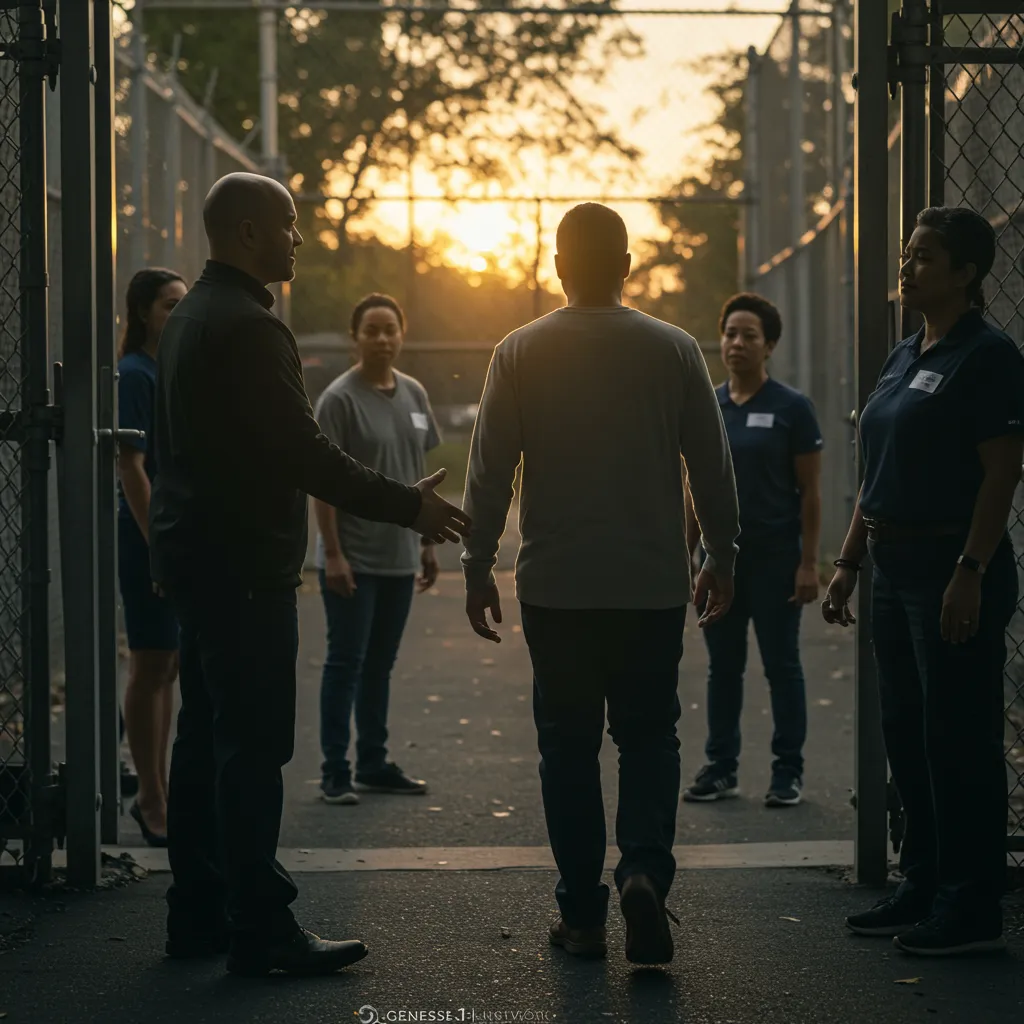
The Hardest Day Isn't Sentencing — It's the Day They Walk Out
Most people assume the hardest moment in an incarcerated person's life is the day they're sentenced. In reality, for many people who've done serious work on themselves inside, the hardest day is the day they walk out the gate.
Because on that day, everything changes — and almost nothing is ready for them.
What Reentry Actually Looks Like
The picture most people have of someone leaving prison doesn't match reality. There's no support system standing at the gate. There's often no job lined up, no stable housing confirmed, and no community ready to receive them. In many cases, family relationships have fractured. Old networks — the ones that led to incarceration in the first place — are often the only ones still intact and accessible.
The first 30 to 90 days after release are statistically the most dangerous window for re-offense. Not because people don't want to change — but because the conditions for change collapse the moment the structure of incarceration disappears, and nothing replaces it.
This is the gap Genesis 1 Network was built to close.
What Post-Release Support Looks Like at Genesis 1
Our commitment to the people we serve doesn't end at the prison gate. It extends into the hardest months of reentry through three core pillars:
Mentorship connections. Every member leaving a Genesis 1 chapter is connected to a mentor in the community — someone who has walked a similar road or who is committed to consistent presence in their life. Not a caseworker. Not a program contact. A person who shows up.
Employment networks. We work to connect released members with employers who are willing to give a second chance. Finding work in the first weeks of release isn't just a financial necessity — it's a stabilizing force. Purpose and structure matter, and a job provides both.
Monthly potlucks. These aren't just meals. They're accountability gatherings where people who have come through the program reconnect, share where they are, and hold each other to the commitments they made. The relationships built inside the facility continue to function on the outside. That community continuity is one of the most powerful recidivism-prevention tools we have.
Acts 16 and What It Means for Reentry
The story that anchors Genesis 1 Network is Acts 16:25-34 — Paul and Silas in prison, praying and singing at midnight, the earthquake that opened every door, and the jailer who fell before them trembling.
What's easy to miss in that passage is what Paul did when the doors opened. He didn't run. He stayed. He used the open door not to escape, but to reach the jailer — and through him, his entire household came to faith.
That is the posture of reentry ministry. The doors open. The question is what someone does next — and whether anyone is standing there to walk with them through it.
You Can Be That Person
Genesis 1 Network is looking for mentors, volunteers, and community partners across Oklahoma who are willing to be present in the lives of people rebuilding after incarceration. You don't need a theology degree. You need consistency, compassion, and a belief that God redeems what the world has discarded.
Start the conversation today. Visit genesisonenetwork.org/contact, fill out the form, and our team will reach out to find the right fit for you. The work is happening now. The need is real. And the invitation is open.